If you are weighing an Amboseli safari without Kilimanjaro views, the honest answer is yes. The mountain makes a famous photograph, but Amboseli is a complete wildlife ecosystem. Its elephants, wetlands, birds, and open plains carry the experience on their own. A clear summit should be treated as a bonus, not the test of whether the trip worked.
Is an Amboseli Safari Without Kilimanjaro Views Still Worth It?
Yes. Amboseli remains worthwhile without a clear Kilimanjaro view because its elephant herds, open plains, permanent wetlands, birdlife, and strong wildlife photography do not depend on the mountain. Kilimanjaro is an exceptional backdrop, not the park’s only attraction. Treat a clear summit as a bonus and judge the safari by the whole ecosystem.
Many first-time safari planners picture a single elephant standing in front of the snow-capped peak. That image is powerful, but it can create the wrong expectation. In reality, Amboseli is a working landscape of marshes, grasslands, and dust. On a cloudy day, you still get the same animals, the same guides, and the same light on the plains. For a wider look at the park, read our Amboseli safari guide before you set your route.
What Wildlife Can You See Without the Mountain Backdrop?
You can still see large elephant families, lions, cheetahs, hyenas, giraffes, zebras, wildebeest, buffalo, hippos, and many wetland and grassland birds. Amboseli’s open terrain makes animals easier to spot and follow, while underground water supports marshes that attract wildlife even when the horizon is cloudy.
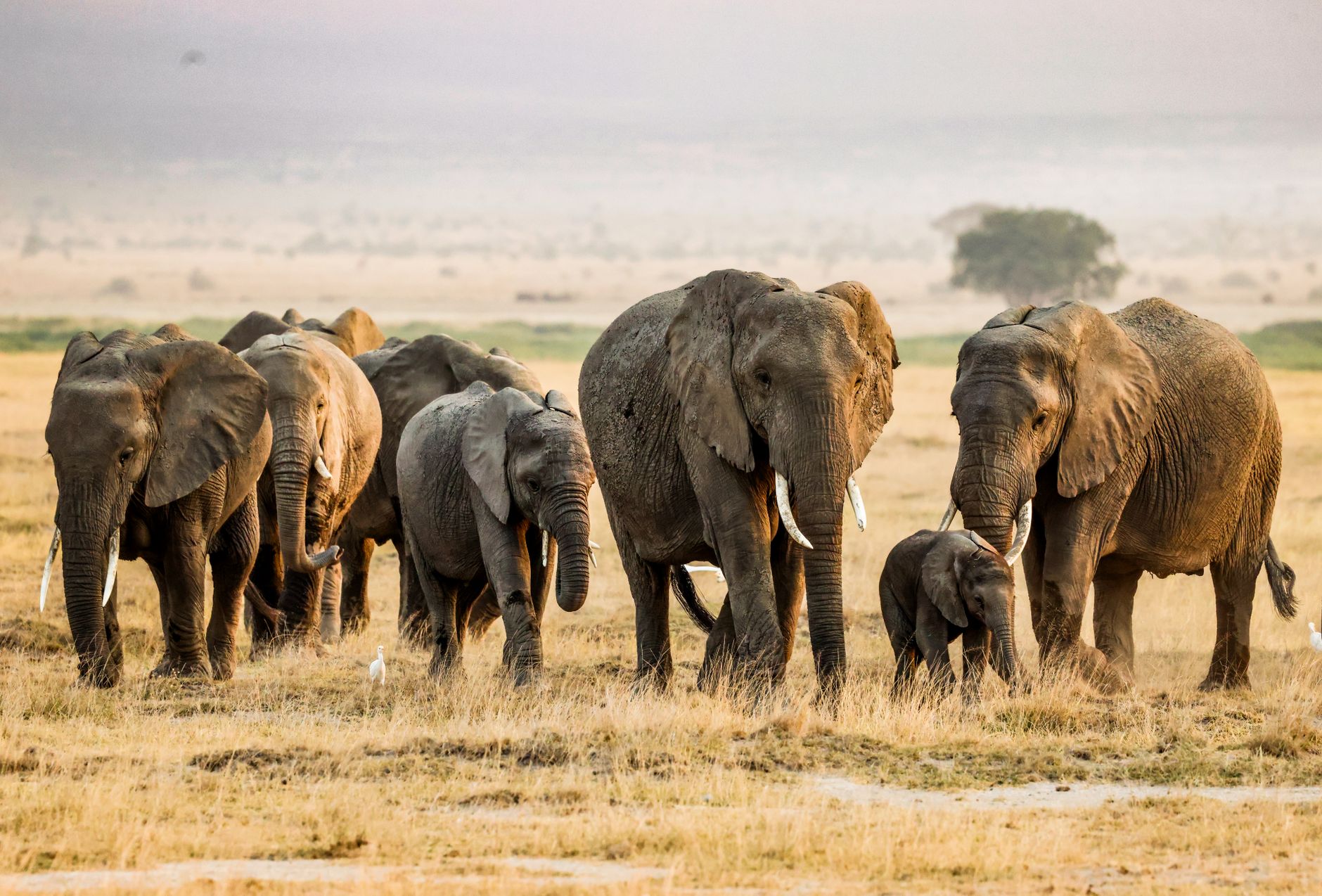
The famous Amboseli elephants are a highlight. Matriarchal groups move across open ground in a way that is hard to match in denser reserves. Lions use scattered bush for cover, and cheetahs favor the short grass. Around the swamps, look for hippos and buffalo along with a long list of waterbirds. Zebras, wildebeest, giraffes, and hyenas can appear within a single drive. The mountain may dominate the postcard, but the animals carry the real story.
Why Is Kilimanjaro Not Visible From Amboseli?
Kilimanjaro is often hidden by cloud, haze, or dust rather than being absent from the landscape. The summit commonly becomes less visible as daytime heat builds clouds around the mountain, so a cloudy game drive does not mean the mountain will stay hidden for the entire visit. Visibility can change within hours.
On most days, the mountain is still there. What changes is the air between you and the summit. Early morning mist can sit low over the plains. By mid-morning, the sun warms the slopes and clouds start to wrap the peak. In the Amboseli dry season, wind can lift dust into the air. The result is that a view can disappear and return within an hour. If one drive is cloudy, it is not a permanent condition.
When Is the Best Time to Visit Amboseli for Clear Skies?
The best opportunity is shortly after dawn, generally between 6:00 and 8:00 a.m., before clouds build around the summit. June through October and January through February usually offer drier conditions, while October and February can produce especially clear mornings. Late afternoon may also work, but dawn is the more reliable viewing window.
| Season | What to expect | Kilimanjaro likelihood | Best wildlife focus |
|---|---|---|---|
| Dry season, June to October | Clear mornings, dust later, wildlife near water | Higher early, lower by midday | Elephants, big cats, open plains |
| Warm dry spell, January to February | Short dry window, good light | Higher early, can stay clear into late morning | Birdlife, large herds |
| Wet season, November to December and March to May | Green scenery, rain, fewer vehicles | Lower, but can clear after dawn | Birds, newborn animals, quieter parks |
The best time to visit Amboseli for a clear summit is not the same as the best time for game viewing. Dry months give you clearer air but more vehicles. Wet months bring greener scenery and fewer crowds, along with a bigger risk of cloud. For most travelers, the safe choice is a dry-season morning with a flexible itinerary. If you are also weighing the Masai Mara for this trip, compare the two parks in our Masai Mara vs Amboseli guide, and check our best time to visit the Masai Mara advice if you plan to combine both.
How Many Nights Should You Stay in Amboseli?
Two nights is the practical minimum if seeing Kilimanjaro matters, because it gives you multiple early-morning chances rather than one risky attempt. Three nights is better for photographers and travelers who want flexible game drives. A one-night stay can deliver a clear view, but it leaves little room for cloud, haze, or poor timing.
Many standard itineraries allow only one night. That gives you an afternoon drive and one early morning drive. If the mountain hides on both, you leave without a summit photo. With two nights, you get four drives and two dawn windows. Three nights adds more, and it may be worth the extra day if photography is your main goal. A longer stay also lets you watch how wildlife moves between the swamps and the plains.
Where Should You Focus Amboseli Game Drives and Photography?
Prioritize early drives near Amboseli’s wetlands and open plains, where elephant herds and other animals concentrate, and include Observation Hill for broad landscape views. Keep the schedule focused on wildlife even when the mountain is hidden. Cloudy conditions can produce atmospheric light, layered skies, and compelling elephant images without a summit backdrop.
Start your Amboseli game drives near the swamp edges. That is where large elephant families drink, bathe, and feed. Observation Hill offers one of the few raised views over the wetland system, and it is a good place to watch the rhythm of the day. On cloudy mornings, soft light can be excellent for portraits. You do not need the mountain to make a strong photograph. The animals, the dust, and the open plains are enough.
How Do You Plan an Amboseli Safari Around Changing Weather?
Build flexibility into the itinerary instead of chasing one guaranteed viewpoint. Start drives early, allow a midday rest when visibility commonly deteriorates, and use a second afternoon or dawn drive to reassess the horizon. In wetter months, expect greener scenery and more cloud; in dry months, expect clearer air but dust and concentrated wildlife around water.
Start by accepting that the mountain view is not under your control. What is under your control is timing. Plan an early departure, reserve a midday break, and request a late afternoon drive if visibility is poor. Ask your operator about road conditions for the season you intend to travel. Our Kenya safari rainy-season road advice can help you prepare if the rains arrive. If you prefer more flexibility, a private guide can adjust the route on the spot. The choice of a private guide versus group safari is worth weighing before you book.
For a different experience, consider the private conservancies around Amboseli. They can feel quieter than the national park and may offer more flexibility with vehicles. Our Kenya safari conservancy fees guide explains how those areas are priced and how the costs compare with the main park.
What Do Travelers Ask About Amboseli Without Kilimanjaro?
Is Amboseli Worth Visiting Without Seeing Kilimanjaro?
Yes. Amboseli is still a strong safari destination for elephants, open-country wildlife, wetlands, birdlife, and photography. A clear Kilimanjaro view improves the scenery, but it is not required for a rewarding game-viewing experience.
Can You See Elephants in Amboseli Without Kilimanjaro?
Yes, and elephants are one of Amboseli’s main reasons to visit even when the mountain is hidden. Large herds are commonly seen on the open plains and around permanent wetlands, so wildlife remains visible in cloudy conditions.
Why Is Kilimanjaro Not Visible From Amboseli?
Cloud, haze, and dust frequently obscure the summit, especially after the morning air warms. Kilimanjaro may be hidden during one drive and visible later, so a single cloudy view does not mean the mountain cannot be seen during the trip.
What Is the Best Time to See Kilimanjaro From Amboseli?
Early morning, especially around 6:00 to 8:00 a.m., usually offers the best chance before cloud builds around the summit. Dry periods from June through October and January through February generally improve visibility, although no season guarantees a clear mountain.
How Many Nights Do You Need in Amboseli to See Kilimanjaro?
Plan for at least two nights if the view is important. That provides several game drives and two dawn opportunities, while three nights gives photographers more flexibility. One night is possible but carries a much higher risk of missing a clear summit.
Where Can You Compare Safari Operators for Amboseli?
An Amboseli safari without Kilimanjaro views is a realistic possibility, but it does not mean a weak trip. The right operator will help you plan early mornings, choose the right number of nights, and adjust when the weather changes. Start by comparing safari operators on FindMySafari, then browse packages from Valley Safaris and Trunktrails Safaris. Use the planning time to focus on the elephants, the wetlands, and the wildlife that make Amboseli worth visiting in any light.
Where Can You Find More Safari Planning Resources?
- Amboseli map and guide from SafariPure
- Amboseli National Park guide from Trunktrails Safaris
- Map of Amboseli from Valley Safaris
- Amboseli destination guide on FindMySafari